GL Newsletter April 2012

From the Editor

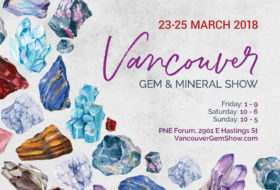
We had many (and several American friends from WA state) visiting our booth at the BC Gem & Mineral Show last week-end. Every day the GL Gem Raman attracted mineral collectors who tested their samples and made suggestions about how the Raman could be modified for their particular applications (at additional cost); we will be looking into it as some of the features might be of interest to gemmologists as well.

We have started preparing for the Geo-Raman in Nancy, France (June 11-13); I am looking forward to meeting several colleagues and demonstrating the GL Gem Raman . We also added two new refractometers to our gem testing tools in the online store.

New Refractometers

The new compact and fairly accurate GL Gem Refractometer (on-line price $ 129.95) is a good choice for the beginner gemmologist and non-professional user. Like all basic Chinese refractometers the units had to be manually recalibrated against our R.I. 1.4703 reference stone.

Very impressive is the performance of the new and redesigned GL Professional Refractometer (on-line price $ 349.95); it comes in a white plastic casing and was actually properly calibrated.

The refractometer has a high hardness CZ (cubic zirconia) hemicylinder and a built in LED-based yellow light source that is powered by either two AA batteries or a small 110-240V power supply with 3VDC output.

The scale is very easy to read and the shadow lines are very sharp; the refractometer is more accurate than the Japanese built Kyowas we purchased for the C.I.G. classes some 20 years ago for $ 650 each.

This new professional refractometer has the best performance for its price and is highly recommended.

GL Gem Raman Upgraded

Before delivering the first production units of the GL Gem Raman we were able to change slightly the design of the optical path and replace one lens. As a consequence the Raman signal has improved by 20 – 30% eliminating the second step required for readjusting exposure before subtracting the background.

After focusing the Raman beam the default exposure is now sufficient to get an excellent Raman spectrum off most surfaces. In this sense the Raman is easier to operate than the GL Gem Spectrometer and faster to obtain results. Watch “How to obtain a spectrum with the GL Gem Raman” – (video, no sound – window will pop up) of green untreated jadeite.

All Ramans delivered have already the modified design and the units are slightly smaller and lighter than the proto-type. For up-to-date information go to our special page for the GL Gem Raman.

GLGemSpec News

We have updated the on-line version of “How to Get Started” instructions (for registered GLGemSpec users; can be translated). For additional spectral information we recommend the Edward J. Gübelin Collection which contains unpolarized spectra of a wide variety of gemstones in the 350-750 nm range.

For testing opaque materials or gemstones with little or no light transmission such as diamonds an additional light source (fiber optics halogen light or Xenon flash-light) should be used.

We now carry a good quality portable Xenon flashlight in the on-line store.

We compared the radiation spectrum of the built-in GL Halogen 10W Gem Holder and the Xenon flashlight. To reduce noise in the near UV region we are running the 10W/12V halogen bulb hotter at 15Volts.

The Xenon light can be used with the GL Gem Holder or unmounted as an excternal light source.

The Xenon light ( 7.4V 15W bulb) comes with 2x CR123A Lithium 3V batteries; however, we recommend to use rechargeable batteries of type 16340. These batteries are rated 4.2V at full charge each and will produce an illuminance of 154.00 lux overall with an output of 214.06 lumens (according to the manufacturer) which is quite impressive.

Searchable Database for the GL Gem Spectrometer

We have been looking for a spectral recognition software/database program for some time; unfortunately commercial programs cost from $ 1,000 – 2000 exceeding the cost of the spectrometer. Analysis of transmission spectra is complex as it is much dependent on optical path which will affect the appearance of the spectrum.

Search

Thermo Scientific provides a Spectra ONLINE service which can be used with GLGemSpec files. We have tried it and it may be useful for the identification of certain samples.

First the GLGemSpec file *.fak has to be imported into Spekwin 32 and saved as a *.spc (THERMO Galactic GRAMS) file. If your spectrum has not been normalized in the GLGemSpec program it can be done here before saving.

On the on-line data entry browse to your saved *.spc file and submit it. A new window appears: under “Technique” select UV-VIS Spectrum, under “YUnit” Absorbance or Transmission, leave the “Algorithm” in the default option with “Auto-Baseline” ON. Then click “Search”.

The results show references with similar spectra and their chemical composition.

Geo-Raman Xthmeeting, Nancy (France) from June 11 – 13, 2012

“Geo-Raman meetings started in Paris in 1986 followed by Toulouse (1989) and Nantes (1996). The meeting moved out of France for the first time in 1999 (Valladolid-Spain) and continued a wide international journey, Prague 2002, Hawaii 2004, Granada 2006, Gent 2008 and Sydney 2010. They are focused on the application of Raman Spectroscopy to Earth Sciences from the surface to the deep mantle and to earth materials used in cultural heritage. Such meetings are typically interdisciplinary and allow Earth scientists and Raman spectroscopists to present their latest results obtained in these disciplines and discuss transversally. Raman instrumentation and in situ experimentation are also a part of such meetings since this optical spectroscopy in a huge variety of environment including the exploration of planet of the solar system”. For more information visit the website.

We submitted an abstract The GL Gem Raman – a poweful tool in gem and mineral identification (PDF) and will demonstrate the GL Gem Raman during the conference. Please contact me if you are interested in attending.

New Studies on Tibetian Andesine

In the never ending story of Andesine several articles have been published recently which are of interest:.

Joel Arem’s (PhD, F.G.A.) article Observations on the Occurrence of Plagioclase Feldspars (PDF) was also published in the ICA’s (International Colored Gemstones Association) magazine InColor – Winter ’11 (Electronic version)

___________

Wolf Kuehn, B.A., M.A., Dipl.oec, F.G.A., F.G.G. – GLR&T Project Manager

CIGem News Spring 2012

ISSN 0846-3611 GEMMOLOGY CANADA – Wolf Kuehn, F.G.G., F.G.A., Editor

From the Editor:

Since my return from a very successful AGTA GemFair in Tucson, Arizona we have been busy shipping orders and answering questions about our courses and products. I am happy to report that the work for the GL Gem Raman has now been completed and the first units are ready for shipment.

The Canadian Institute of Gemmology will be exhibiting at the upcoming BC Gem and Mineral show (see below). At the C.I.G. booth the GL Gem Spectrometer and the GL Gem Raman will be demonstrated to both dealers and visitors; we also have new books on display and specials on gem testing equipment are available. Please drop by if you are in the area.

I will be travelling to Europe to attend the Geo-Raman in Nancy, France (June 11-13). Before and after I am available for any meetings, demos or talks to groups interested in our line of spectrometers and any training sessions; please contact me.

We have started revamping our website. The interface is being upgraded using the Genesis Framework which will give us the flexibility and power to develop a modern and secure web environment.

BC Gem & Mineral Show – April 13, 14 & 15

Ag-Rec Building, Central Fraser Valley Fairgrounds, 32470 – Haida Drive, Abbotsford, British Columbia

  • Friday: 10:00am – 8:00pm
  • Saturday: 10:00am – 6:00pm
  • Sunday: 10:00am – 5:00pm

Admission: Adults – $6.00, Students (6 – 17) – $2.00, Under 6 (accompanied by an adult) – Free

Learn about mining from Britannia Mine Museum and Sego Resources, see the beauty created by Clayburn Copperworks, Beads, Crystals, Minerals, Gifts & supplies for the lapidary hobby. Many Club Displays, Demonstrations, Grab Bags, Children’s Creative Workshop, Gold Panning & Door Prizes.

C.I.G. Advisory Board Member Charles Lewton-Brain Receives Award

(Heath McCoy, from – The Calgary Herald – 28 Feb. 2012)

A Calgary goldsmith, artist and educator, renowned internationally for his innovative work in the world of jewellery, will be presented with a 2012 Governor General’s Award in Visual and Media Arts at the end of March. Charles Lewton-Brain, 55, longtime teacher in th jewellery and metals program at the Alberta College of Art& Design (ACAD) will receive the Saidye Brongman Award at the official awards ceremony on March 28 at Ottawa’s Rideau Hall. Along with a special issue medallion by the Royal Canadian Mint, Lewton-Brain and his fellow recipients will be awarded with $25,000.

The London, England born goldsmith has dedicated his life to the art of jewellery since being introduced to the craft as a teenager while in the American southwest. It was a girlfriend’s mother, a dealer of Native American jewellery, who got him hooked, he says, when she taught him how to grind turquoise by hand “the old fashioned way, using a grindstone.”

Studying jewellery and metals at the Nova Scotia College of Art Design and then traveling around the world to learn from some of the top goldsmiths on the planet, Lewton-Brain arrived in Calgary in 1986 to begin his illustrious career at ACAD. He first found himself in the international spotlight in the late ‘80s for inventing a technique called foldforming, which uses simple hand tools to rapidly shape sheet metal. Lewton-Brain has also made a substantial impact as an educator. In addition to his work at ACAD he started his own publishing company, Brain Press, through which he’s published “eight books and about 25 papers,” he says. He also co-founded Ganoskin.com, the world’s largest free online resource for jewellers.

Emerald, Sapphire, Diamond Coated CZ

At the booth of Anupam Gems located in the GJX tent during the Tucson gem shows we were introduced to several new “man-made” gemstones (see advertisement).

We purchased a very nice looking .80 ct emerald, a 2.58 ct deep blue sapphire and a .10 ct sparkling diamond simulant.

The emerald was disclosed as “recrystallized” in a proprietary process, the sapphire as “diffusion treated” and the “Diamondspark” as a diamond coated cubic zirconia (“Diamond Nano Coated CZ from Japan”). We tested the samples with regular gem testing tools, the GL Gem Spectrometer and the GL Gem Raman.

The emerald was showing a similar spectrum as the Lechleitner type I and II synth. emerald samples we have in the C.I.G. study collection. However, the stone was almost flawless under 40x magnification.

The seller could not explain the manufacturing process but we believe it to be hydro-thermal; similar stones can be had from Russian sources for around $ 50/ct; I think we paid a bit too much for the stone but it has a very attractive Muzo colour.

Under the microscope the “Diamondspark” looked very much like diamond but tested CZ with a diamond tester.

With the GL Gem Raman we obtained the typical spectrum for cubic zirconia.

The very nice looking 2.58 ct blue sapphire was disclosed as diffusion treated.

At their website, however, listed are re-crystallized sapphires “Made from 100 % natural stone in Japan using nano tech”.

Under the microscope and in immersion we could not find any typical pattern pointing to surface diffusion treatment. The stone was flawless under 40x magnification; if the sapphire had been re-crystallized one would expect some occurrence of “melting” features or gas bubbles which are difficult to keep out.

While untreated sapphires rarely exhibit fluorescence, stones exposed to high-temperature heat treatment and synthetic (flame fusion) sapphires do; read the article “Heat Seeker” by R W Hughes/J L Emmett. Our sapphire became fluorescent when irradiated by the laser beam in the Raman unit.

GIT reported an “Update on Titanium diffused Sapphire” in 2010 where colour patching was more difficult to detect.

Using the GL Gem Spectrometer we obtained similar absorption curves on record for natural (untreated, unheated) Ceylon sapphire; the Raman spectrum was affected by the fluorescence of the stone and therefore of limited value.

In summary the information provided by the seller was confusing. The high price for the emerald and the very low price/ct paid for the sapphire cannot be explained either. In smaller sizes these stones could be cause of concern as they might be difficult to identify and further studies are necessary; if they are bigger (and the seller had fairly large stones for sale) the lack of any inclusions should ring the alarm bell.

Untreated Natural [name of gemstone]

Walking through the isles of the AGTA GemFair I noticed many signs stating “UNHEATED”; it appears to be a new selling strategy to avoid any disclosure that perhaps this “unheated ruby or sapphire” may have been treated by some other means. If that’s the case it still does not make the gemstone a natural gemstone. An untreated gemstone is a natural gemstone (by definition coming out of the ground). A ruby is a “natural” gemstone unless it is heat-treated, filled, or enhanced by other means and disclosed accordingly.

There are very few “untreated” rubies and sapphires; most of these rubies, emeralds, sapphires (just to name a few of the more popular gems) have been modified, manipulated or “man-made”. Most consumers have no idea what these stones looked like when they came out of the ground. If they did and realized how much the treated gemstone will cost them perhaps they started looking for alternatives. There are very nice man-made gemstones which are available at reasonable prices; they are more durable and can look very deceiving!

I am occasionally wearing a small 14k yellow gold ring set with a very attractive Kashan synthetic ruby to my gem identification classes. Most students believe it is the real thing until I have them check the stone under the microscope. I also have a ring set with a large chrysoprase cabochon which is often mistaken for jadeite.

GL Gem Raman Ready for Delivery

I have used the GL Gem Raman for one month now and I must say it has been the most effective and time saving tool in my career as a gemmologist.

In a few minutes I could identify a carved Buddha statue in my office as jadeite which I had difficulty to confirm in the past due to its size.

Discovering the potential of the Raman helped me greatly in preparing the support materials for the GL Gem Raman package; new users will find the operation of the unit straight forward and in some ways easier than the GL Gem Spectrometer.

I have almost stopped using the traditional testing tools (with the exception of the microscope) as the Raman can handle most gem materials (including those set in jewellery) as long as they fit in the sampling stage (max. 90 x 90 x 50 mm). If the sample is larger the observation lid needs to be kept open and safety goggles must be worn during the testing.

It takes less than 2 minutes to obtain a spectrum. It may take a bit longer if the sample is fluorescent as the laser intensity has to be reduced and some parameters in the GLGemRaman program adjusted; if the fluorescence is too strong the GL Gem Spectrometer will be helpful.

The GL Gem Raman is an ideal addition to the GL Gem Spectrometer which has over 100 users world-wide. The operation of the Raman unit is easy to learn as is the calibration procedure in case the unit has been transported and/or exposed to shock. A large database for gems and minerals is available to match a spectrum. Like a GLGemSpec spectrum file it can be saved and imported into Spekwin 32 for further processing and editing (see spectral graphs on this page).

The package comes with a support CD (including video) for proper operation of the GL Gem Raman; a trained gemmologist should be able to follow and execute the step-by-step instructions including the calibration procedure if necessary. A 2 1/2 hour workshop (GEM 370 offered by the Canadian Institute of Gemmology and other industry groups in the future) is recommended for gemmologists, mineral collectors and other users; we also provide assistance via Skype video-conferencing.

The GL Gem Raman is now available for under $ 7,000 FOB Vancouver, Canada . Click here for more information; to order go to the Gemlab on-line store.

Warning for Students in Gem ID Classes

It may not be widely known that strong fiber-optic light sources can cause damage to the eye; reflections coming off the surface of a gem while being observed with a spectroscope (in particular the small diffraction grating type) can cause burns to the retina which in some cases cannot be repaired.

In earlier newsletters I have also warned against the use of green and/or blue lasers for gem identification or fluorescence testing without proper eye-protection. A much safer option is the GL Gem Spectrometer or the GL Gem Raman where the sample area is fully secured and the spectral graph is seen on the computer monitor.

GEM 250 GEM IDENTIFICATION II (Advanced)

  • Course GEM 250-1 Sat – Tue, May 19 – 22, 10 a.m. – 4:30 p.m. (4 days)
  • Location: Richmond, B.C. Airport Hotel
  • Prerequisite: “Gemmologist” certificate or similar gemmological qualification.
  • Fee: $ 995 includes comprehensive study guide, Gemstone Inclusion Library, use of lab equipment and study stones.

In this course students will learn state-of-the-art techniques including immersionscope, konoscope, advanced spectroscopy, etc. designed to identify confidently any gemstone encountered in the industry. Between 100 and 120 challenging gems including the most recent synthetic and imitation gem materials are available for testing.

Here a brief list of man-made gems in our study collection: Chatham, Kashan, Ramaura, Knischka, Lechleitner, Regency, Biron, Lenix, Gilson, Tairus rubies, sapphires, emeralds, alexandrite, opal and many others. Gem enhancement techniques such as heat-alteration, surface colour diffusion, irradiation and glass filling are studied.

Hands-on exercises with our portable in-house developed GL Gem Spectrometer and GL Gem Raman system. Practicing gemmologists may use this lab class to up-grade their skills.

To Register, please call: 604-530-8569

GEM 370 GL Gem Raman Workshop

This course is for current or future users of the GL Gem Raman system.

  • Using PowerPoint presentations the development and use of Raman spectrometers is introduced.
  • Learning step-by-step testing method with GLGemRaman software and searchable database; procedure of proper calibration with Laser Glasses (190-548nm);
  • Practical testing of a number of interesting gem materials by the participants under supervision of the workshop facilitator.

GEM 370-2 Tue, May 22 from 6:30 – 9 p.m. (2 1/2 hours)

Location: Vancouver Airport Hotel TBA, Richmond B.C., Canada

Fee: $ 295 (limited to 5 participants). To register on-line go here.

We reserve the right to cancel courses if there is insufficient enrolment; upon return of all course materials students will receive a full refund for the tuition paid but no other compensation can be offered.

Please wait with travel arrangements until final confirmation.

For more info about the C.I.G. Professional Development Program (AG-PDP) go to Advanced (GEM 200-level) Courses or download brochure (PDF).

The Canadian Institute of Gemmology is a member of the World Gem Society.

For a nominal fee you can access a variety of resources available.

___________

Wolf Kuehn, B.A., M.A., Dipl.oec, F.G.A., F.G.G. – Director of Education

© 2012 Canadian Institute of Gemmology, Vancouver, Canada – www.cigem.ca

The name and logo “Canadian Institute of Gemmology” and the designation Accredited Gemmologist (C.I.G.)® are registered trade/certification marks (Registration # TMA407372 CIPO)

Canadian Institute of Gemmology

GL Gem Raman released

FOR IMMEDIATE RELEASE: GL Gem Raman TM – now available

March 1, 2012, Vancouver, B.C., Canada

Gemlab Research & Technology has released its GL Gem RamanTM system.

The GL Gem RamanTM is an advanced gem testing instrument for experienced gemmologists, gem merchants, mineral collectors and others; it is also an excellent educational tool.

GL Gem Raman linked to database

Carved jadeite statue being tested

The GL Gem Raman quickly can tell the difference between diamond, cubic zirconia, glass and zircon, distinguish jadeite from nephrite, separate real from faux pearls, tell whether it is ivory or plastic. There is great potential for detecting treatments and colour enhancements in gemstones; it will help in the determination of the nature of diamonds, gemstones and minerals.

The GL Gem Raman software allows real-time spectral acquisition; it can be used to operate both the GL Gem Spectrometer and the GL Gem Raman making them a powerful combo unit for advanced gemstone and mineral identification. It can replace other advanced spectrometer types such as NIR256-2.5 near-infrared spectrometers, FTIR (Fourier transform spectroscopy) spectrometers and temperature regulated Raman units.

The spectra can be saved and imported into a searchable database program with over 3,000 references; the database is linked to the large on-line mineralogical RUFF database for Raman spectra.

GL Gem Raman users will also have access to the C.I.G. (Canadian Institute of Gemmology) gem reference library which is being compiled from its large gem study collection. Other reference databases can be consulted on-line.

The GL Gem Raman is now available for under $ 7,000 FOB Vancouver, Canada .

Click here for more information; to order go to the Gemlab on-line store.

Contact: Wolf Kuehn, Project Manager, Gemlab Research & Technology, (604) 530-8569

Mailing address: P.O. Box 57010, Vancouver, B.C., V5K 5G6 CANADA

© 2012 Gemlab Research & Technology, Vancouver, Canada – www.gemlab.ws

The name and logo is a registered trade mark (Registration # TMA407372 CIPO)

Tweet

CIGem News Winter 2012

ISSN 0846-3611 GEMMOLOGY CANADA – Wolf Kuehn, F.G.G., F.G.A., Editor

From the Editor:

I wish everyone a Happy and Rewarding New Year.

It appears that 2012 will be an interesting year for gemmology and all interested in the fascinating world of gems and jewellery. There may be a decline in activity at the various levels of the gem industry; however, there is a lack of well trained “gem technologists” who are absolutely necessary in this challenging world of new gem discoveries, gem treatments and innovative (and sometimes questionable) marketing schemes. Gemmology is a life long learning experience and perhaps now is the time to look into your professional development.

Tucson February 2012

If you are visiting the Tucson gem shows please drop by at the C.I.G. booth #31 right next to Gem-A at the Galleria Level of the AGTA GemFair. We will have the GL Gem Spectrometer on display and the latest information about the GL Gem Raman.

You may purchase a copy of Robert James’ new Guide to Tucson: Treated and Created Gems; it also can be ordered from the link.

As part of the World Gem Society Tour of Tucson 2012 activities I will be giving a presentation on Colombian emeralds at the Holiday Inn Suites at 1564 W. Grant Road, Tucson, AZ on Wednesday, February 1, 2012 at 7 p.m. Please join us for an evening of fun.

The Truth about Feldspars

Dr. Joel E. Arem, PhD, FGA has completed a new research paper entitled “Obervations On The Occurrence Of Plagioclase Feldspars (PDF)“; please read this scientifically sound report and make your own conclusions.

In several previous CIGem News issues I have openly stated my position and opinion about the “Andesine Scam”. I am happy that a scholar like Joel Arem (PhD, Harvard University) has written a convincing article about the geological facts surrounding feldspar localities.

The whole story about large gem quality andesine from Congo combined with questionable research on specimen supposedly coming from Tibet and Mongolia appears to me an elaborate, well planned and executed hoax! I will change my opinion as soon as I read a scientific report of an independent geological research team verifying a gem quality producing mine in Congo or Tibet.

Emerald Controversy

National Jeweller, CNN and a number of media outlets reported about the world’s largest cut emerald, a commercial-quality, 57,500-carat stone, mined in Brazil and purchased via the Internet from a dealer in India.

Read the article Huge emerald digs up controversy, the “emerald” weighs 11.5 kilograms, or about 25 pounds.

Gemstone Forecaster

I highly recommend reading the Winter 2011 issue of the Gemstone Forecaster newsletter published by R. Genis. This edition contains an eye-opening interview with Cap Beesly (formerly AGL) about the current gem laboratory situation, an interesting video by Al Jazeera about Burma and several other newsworthy items.

GL Gem Raman Spectrometer

System layout of the GL Gem Raman

Download info sheet (PDF)

We have finished testing the proto-type of the GL Gem Raman™ spectrometer and started with the manufacture of a commercial unit. We hope to have the first GL Gem Raman spectrometers for sale by mid-February 2012.

Please note that the export of a Raman spectrometer to certain countries may require an official safety certificate; please contact us for more information.


The GL Gem Raman quickly can tell the difference between diamond, cubic zirconia and zircon, distinguish jadeite from nephrite, separate real from faux pearls, tell whether it is ivory or plastic. There is great potential for detecting treatments and colour enhancements in gemstones; it will help in the determination of the nature and colour origin of diamonds and other gemstones.

More inforation about the GL Gem RamanTM spectrometer system here.

New Version for GLGemSpec Program

We just finalized and tested version 2.5 of the GLGemSpec software. All GLGemSpec users should have received their update package by now. Please visit the GL GemSpec Support area for more information.

The update version includes a normalization feature; the spectrograph can be saved and used as a reference in the GLGemSpec data-base for other users to compare.

GEM 350 GLGem Spec Update Workshop

This course is for current or future users of the GL Gem Spectrometer system.

  • Using PowerPoint presentations the development and use of modern spectrometers is introduced.
  • The actual use of an Ocean Optics USB 4000 spectrometer and the GL Gem Spectrometer is demonstrated and compared.
  • Practical testing of a number of interesting gem materials will be conducted by the participants under supervision of the workshop facilitator.
  • Introduction of the GL Raman Spectrometer released in February 2012.

Participants are encouraged to bring their own gem materials for testing. To register on-line go here.

Presenter: Wolf Kuehn, B.A., M.A., Dipl.oec, FGA, FGG

Time: Tue, May 22, 2012 from 6 – 9 p.m. (3.0 hours)

Location: Richmond, B.C., Canada

Limited to 5 participants

Fee: $ 295 (free for current GLGemSpec users)

Participants who purchased the GL Gem Spectrometer system and future purchasers (within one month) will receive a voucher in the amount of $ 295 which can be applied towards upgrade and calibration services, book and instrument purchases in the Gemlab store.

C.I.G. Professional Development Program (AG-PDP)

The Canadian Institute of Gemmology is offering a self-guided study program leading to the Accredited Gemmologist (C.I.G.)® diploma for students who have completed a gemmology program with another institution.

Upon successful completion of the AG-PDP credits and fulfillment of other requirements (such as submission of a scientific paper and payment of an annual license fee) graduates are entitled to use the international recognized designation Accredited Gemmologist (C.I.G.)®.

Entrance Requirements

“Fine Jewellery Expert (C.I.G.)”, F.G.A. or equivalent from other institutions; foreign candidates may apply but must enter Canada under a visitor’s visa (no student visas available). If credentials were obtained before 2002 a practical entrance test must be passed.

Course Credits Required

  • All C.I.G. GEM 200-level courses
    • GEM 210 Diamond Grading
    • GEM 220 Advanced Gemmology
    • GEM 230 Gem Colour Grading
    • GEM 250 Gem Identification II
  • For this course it is recommended that students have basic gem testing equipment at their disposal to complete individual projects at home or at their work place; students will also learn the use of UV- VIS – NIR spectrometers. There will be a five-day practical workshop to complete the AG-PDP program.

To obtain certification as an Accredited Gemmologist (C.I.G.)® a scientific paper has to be submitted within 6 months of completion of the A.G. (C.I.G.) diploma exam. See course outline or View/Download brochure (PDF) and View/Download Application Form (PDF). If you have any further questions about the AG-PDP program please call (604) 530-8569.

Individual courses must be completed within 12 months; courses leading to a certificate or diploma must all be completed within 24 months.

For more info about the C.I.G. Professional Development Program (AG-PDP) go to Advanced (GEM 200-level) Courses or download brochure (PDF).

World Gem Society

The Canadian Institute of Gemmology is a member of the World Gem Society.

For a nominal fee you can access a variety of resources available.

___________

Wolf Kuehn, B.A., M.A., Dipl.oec, F.G.A., F.G.G. – Director of Education

© 2012 Canadian Institute of Gemmology, Vancouver, Canada – www.cigem.ca

The name and logo and the designation Accredited Gemmologist (C.I.G.)® are registered trade marks (Registration # TMA407372 Canadian Intellectual Property Office)

Canadian Institute of Gemmology

GL Newsletter December 2011

From the Editor

This newsletter is a bit late in the year as I wanted to wait for the first results from the proto-type GL Gem Raman spectrometer.

I spent part of the summer in Europe (image is from Wilder Kaiser Mountains, Austria) and had the opportunity to make contact with several GLGemSpec users.

I wish you a Merry Christmas Season with a Happy and Successful 2012 and hope to see you in Tucson, Arizona in February.

GL Gem Raman Developments:

We finished testing the proto-type of the GL Gem Raman and have started designing a production unit combined with software development. We hope to have the first units for sale at the AGTA GemFair show in Tucson, Arizona in February 2012 or earlier.

More info here.

Here a few comments about the advantages (and disadvantages) of a Raman over other advanced gem testing instruments such as FTIR, UV-VIS-NIR spectrometer, etc:

We have chosen a 300 mW 532nm laser as excitation source as commercial units are now available at economical prices. These devices use diode lasers to “pump” a Nd-YAG laser which operates at 1064 nm. The light from this laser is frequency-doubled to give green 532 nm light. This wavelength is about optimum for both Raman efficiency and the detector operating range. The Raman spectral range is from 200 – 2,500 cm-1 and output under 200 mW is usually sufficient and safe for the sample.

Raman spectroscopy is scattering-based, not transmission/reflection; i.e. no need for sample preparation. Only a small sample area is required; there are no movable optical parts and maintenance is minimal.

The Raman can quickly tell the difference between diamond, cubic zirconia and zircon, distinguish jadeite from nephrite, separate real from faux pearls, tell whether it is ivory or plastic. There is great potential for detecting treatments and colour enhancements in gemstones; it will help in the determination of the nature and colour origin of diamonds and other gemstones.

The GL Gem Raman has a sample compartment big enough to accomodate larger specimen and single pieces of jewellery.

Large reference databases are available on-line such as at the RRUFF Project; GL R&T together with other GL Gem Raman users will build a reference database for the 532nm excitation laser used in the instrument.

Sphene or Sphalerite?

From RUFF Project

In the C.I.G. study gem collection we have one stone marked “sphene (over the limit)”. As I did not get results with the refractometer we checked the stone with the GL Gem Raman; as shown above we could match the stone with the RUFF reference for sphalerite.

BTW: The GL Gem Spectrometer would have provided a (less expensive) answer; both transmission spectra for sphene (titanite) and sphalerite were recorded by Dr. Bill Hanneman with the GLGemSpec in his book “Pragmatic Spectroscopy for Gemologists“. Below the normalized absoprtion spectrum of sphalerite (obtained with our GLGemSpec) and the Caltech reference (Mineral Spectroscopy Server) for sphene (titanite); they do not have a reference spectrum for sphalerite:

GL Gem Spectrometer

If you want to join other GLGemSpec users in over 15 countries you must order your unit soon  to receive it before Christmas; see detailed product information here. We also have a demo unit for sale ($ 200 savings).

In the last 12 months since introduction we have improved the firmware and software to make the spectrometer very efficient for use with or without the GL Halogen 10W Holder.

Experienced users have developed their own illumination setups for use with larger samples and individual jewellery pieces.

As part of our commitment we offer a generous warranty and upgrade policy.

Please order here.

“A comparison study of corundum using the GL Gem Spectrometer” by the World Gem Society; download (PDF) here.

Tucson 2012

AGTA GemFair Tucson 2012 – January 31 to February 5

Get ready for the big event and visit us at booth # 31 on the Galleria Level


We will have all the details  about the new GL Gem Raman and like last year the portable GL Gem Spectrometer will be demonstrated. I also will be giving a workshop and presentation – to be announced soon.

C.I.G. Vancouver Courses 2012

We have posted the schedule for Courses/Workshops in the coming new year here.

World Gem Society

For a nominal fee you can access a variety of resources available to gemmologists and appraisers.

The ISG has also revamped its website and has links to valuable information at their research and reference section page.
___________

Wolf Kuehn, B.A., M.A., Dipl.oec, F.G.A., F.G.G. – GLR&T Project Manager

© 2011 Gemlab Research & Technology, Vancouver, Canada – www.gemlab.ws

The name and logo is a registered trade mark (Registration # TMA407372 Canadian Intellectual Property Office)


Gemlab Research & Technology